Published by California Dating After 40
Repeated contact creates better openings than one-off searching
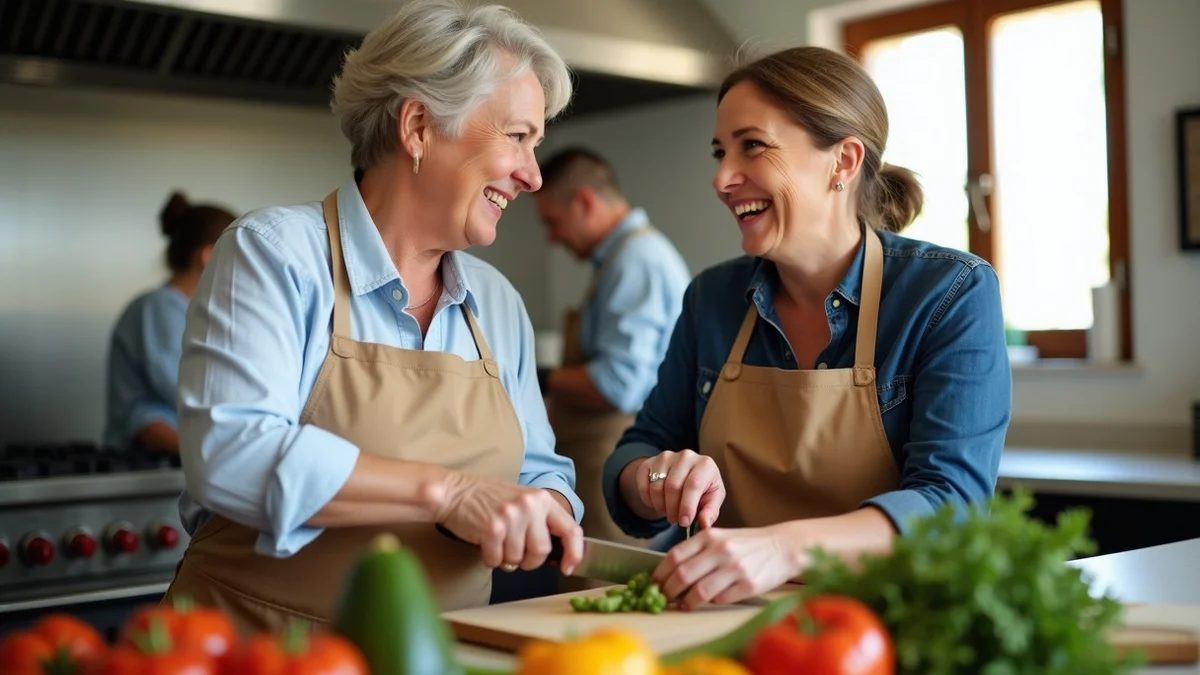
A person returning to dating after a long relationship joins a weekly cooking class. The first conversation may stay focused on the recipe or lesson, while later meetings make it easier to recognize familiar faces, continue an earlier discussion, and notice shared interests. The activity supplies a natural subject, so every interaction does not have to begin with a direct romantic question.
Volunteering and community participation work in a similar way. A repeated shift, neighborhood project, book discussion, or educational class gives people a reason to be together and a chance to see how someone treats the activity and the people around them. One-off events can still introduce someone new, but recurring settings give conversation more than one opportunity to develop.
Where do compatible over-40 singles actually spend time?
Activity groups and classes give people something to talk about while they learn, make, move, or practice together. Options include language learning, cooking, art, dancing, hiking, gardening, fitness, and discussion groups. Museums, libraries, performances, lectures, and workshops can create a similar setting. You do not need an event labeled for singles; look for an activity that draws adults whose interests you would be glad to share.
Professional communities and social venues can broaden the mix. Industry associations, continuing-education groups, alumni gatherings, neighborhood organizations, cafés, and small social events may create openings when people have a common subject to discuss. Volunteering adds another route through nonprofit work, environmental projects, community service, or local fundraising. Personal networks matter too: friends, relatives, coworkers, and former classmates may know someone who is also dating after 40, even when they are not part of a formal matchmaking group.
Local public resources can help locate these settings without turning the search into a business directory. In Los Angeles, the Los Angeles Public Library maintains an events listing that can help readers look for talks, clubs, and workshops. In San Diego, Balboa Park provides a public cultural setting with visitor information for its museums, gardens, and programs. In San Francisco, the San Francisco Public Library maintains an events listing for interest-based public activities. None of these places indicates that an attendee is single, so shared interests and repeated participation still matter.
When California distance turns a local match into a commute
In California, think of “local” as a trip you can repeat, not merely a city name. A class across town may work one evening but become difficult after work because of traffic, parking, transit connections, weather, or the return journey. When getting there takes too much effort, people attend less often and lose the familiarity that makes conversation easier.
A group that looks nearby on a map may still sit across a meaningful regional divide. Between Los Angeles and Orange County, the starting neighborhood, meeting time, and route may matter more than the county line. The same holds between San Francisco and San Jose: shared interests may be there, but regular attendance has to fit the rest of the week. San Diego has its own spread of neighborhoods and communities, so a nearby group may bring more chances to return than a farther event with a broader label.
A workable travel radius begins with the trip that can be repeated after a normal workday or family obligation. That may mean staying within one part of Los Angeles, choosing activities near home in San Diego, or keeping San Francisco options separate from South Bay options. Someone open to a longer-distance connection can expand the radius later, but the first meeting mix is easier to maintain when the locations are close enough for regular attendance.
A weekly mix of social settings
- One repeating class, club, walking group, volunteer shift, or hands-on activity connected to a genuine interest.
- One cultural program, community gathering, professional meet-up, or social venue organized around a subject people can discuss.
- One introduction route through friends, family, coworkers, former classmates, or community contacts who know you are open to meeting someone.
- Locations close enough to reach repeatedly, with the route, timing, parking, transit, and return trip considered before committing to the activity.
Meeting singles over 40 in California becomes less about scanning every possible place and more about returning to settings where conversation has a reason to begin. A local mix of shared activities, public programs, and introductions can keep the search connected to daily life.
Useful official links
- Los Angeles Public Library Events — Los Angeles Public Library
- San Francisco Public Library Events — San Francisco Public Library
- San Diego Public Library — City of San Diego
- San Francisco Recreation and Park Department — San Francisco Recreation and Park Department
- San Francisco Museum of Modern Art — San Francisco Museum of Modern Art
- Los Angeles Department of Recreation and Parks — City of Los Angeles Department of Recreation and Parks